Berners-Lee couldn’t have known he would spark a technological revolution that is making us more efficient, more adaptable, and better stewards of the planet.
In early 2011, hundreds of residents of Haining, China, began complaining to local authorities about a noxious smell in the air. The source of the problem, they insisted, was a solar-panel manufacturing facility operated by Jinko Solar, a Chinese company publicly listed on the New York Stock Exchange.
Over the months that followed, Chinese officials did little to address the complaints. But the dynamics of the situation shifted dramatically that September, when reports of dead fish in a nearby river – directly tying a fluoride leak from Jinko Solar’s factory to local health issues – began spreading through social networking sites and blogs. With citizen journalism in full gear and the world now watching, local protests grew quickly and became more violent. Fearing the situation would spiral out of control, the government was soon forced to halt production at the factory.
A decade ago such an event would have unfolded differently. The protesters likely would have been ignored (or silenced) and the company would have continued to operate with impunity at the expense of the community’s health and environment. But with the evolution of the Internet, and its hyper-linked layer called the World Wide Web, has come a new era of governance for corporations and countries that in the past may have ridden roughshod over the rights of citizens and the environment.
The impact has even been felt in countries with relatively strict regulations. Pierre Gratton, president of the Mining Association of Canada, told attendees at this year’s GLOBE Conference in Vancouver that the emergence of the web helped push the industry to take corporate social responsibility more seriously. “There grew a far greater ability of networks of people to shine a light on an industry that was largely out of sight, out of mind,” he said.
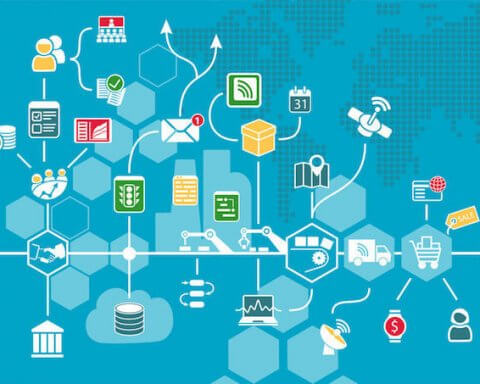
We take it for granted, but the reach and accessibility of the web we have spun have enhanced global sustainability efforts in a way that few could have anticipated in the pre-Google era. The ubiquity of wireless communications and the falling cost of data-gathering sensors have fed the trend and inspired a new generation of innovators determined to turn the “Internet of things” – a virtually unlimited mix of web-connected, information-collecting objects – into a force for good.
The story spins far beyond heightened transparency and accountability. And it builds on older, but no less important, notions of telework and telecommuting. There’s little doubt that web-based e-mail and video conferencing can shrink our environmental footprint by reducing the need for travel and paper. But something much bigger is going on. The web is enabling more sustainable business models, smarter buildings and cities, and our ability to deploy low-carbon energy systems. It is giving us better ways to measure and understand the planet’s health, while also helping us adapt to our changing climate.
“It’s distributed and collaborative, and it scales not top-down but to lateral power,” said American economist and author Jeremy Rifkin. “What’s interesting is you have 2.2 billion people that can now connect, send their own video, and text each other with more distributed and collaborative potential than ever. We’ve really democratized information in terms of transaction costs.” (See Q&A with Rifkin HERE.)
“Sharing” on steroids
We’re also sharing like never before. Web-based services like RelayRides, Getaround and Buzzcar are making it possible for people to rent out their cars to others in their community. So-called peer-to-peer car sharing is part of a larger trend called collaborative consumption that’s focused on making more efficient use of the stuff we buy but don’t use very often. These can range from kayaks to clothing and fashion accessories to that pressure washer in the shed used only once a year. Increased sharing leads to decreased consumer consumption, which many argue leads to a more sustainable existence. Simply put: we make less but use more of what we have.
“You have car sharing and couch sharing – everything is being shared,” said Rifkin. “We’re moving from ownership to access, and from markets to networks. You pay for the time you share a product. That’s really what’s happening here.”
The web has also enabled crowdfunding, which is helping clean-technology startups and renewable-energy developers bypass institutional investors and go directly to the masses in search of funding. Some call it the cleanweb, a term coined by California venture capitalist Sunil Paul. According to Massachusetts Institute of Technology’s Technology Review, the cleanweb is “all about using inexpensive information technology to change how the world consumes energy.” Sites such as solarmosaic.com offer a way for sustainability-minded individuals to invest in solar projects anywhere in the world.
Green ventures, such as Forest Fuels Renewable Heat, are also turning to sites such as U.K.-based crowdcube.com to raise money that they can’t get from the big banks. And through sites such as kiva.org, individuals anywhere in the world can make small loans to entrepreneurs in developing countries. Kiva is a microfinance platform – powered by the people – that is lifting the less fortunate out of poverty. To date, roughly 750,000 individuals have collectively loaned $300 million via Kiva, and the repayment rate is an impressive 99 per cent.
“Big banks and brokerage houses aren’t set up to mobilize millions of people to invest directly into tangible projects and offer an engaging experience,” said Daniel Rosen, co-founder of Solar Mosaic. “Yet that is what so many people crave today. People want to see impact. They want to be connected to the power of their capital and see its force in the world.”
The spread of ideas
A force of sustainability that the web is also helping to unleash is the power of ideas. Sir Tim Berners-Lee, father of the web, is convinced that the platform he first exposed to the world in 1991 can help solve some of our most complex social and environmental problems. That’s why in 2008, he founded the World Wide Web Foundation with a mission to make the web “accessible and valuable” to everyone.
“The web’s capabilities will multiply, and play an increasingly vital role in reducing poverty and conflict, improving health care and education, reversing global warming, spreading good governance and addressing all challenges, local and global,” according to the foundation’s vision statement.
Indeed, one of its first projects is aimed at combatting desertification in West Africa, where farmers are now using mobile phones to access the web and share new agroforestry techniques that can restore fertility to parts of the dry Sahel region.
Such techniques have existed for more than 20 years and are highly effective. Yacouba Sawadogo, for example, is a peasant farmer in Burkina Faso who came up with the idea of digging holes in dry, nutrient-depleted land and filling them with manure and biodegradable waste. The waste provides nutrients for the surrounding soil and attracts termites. The insects, in turn, carve small tunnels through the dense soil, making it easier for water and nutrients to flow and be absorbed, and gradually bringing fertility – and plant life – back to the land.
Sawadogo has shared his approach with locals over the past two decades, and through word-of-mouth other farmers have successfully deployed the technique. More than half a million hectares (1.2 million acres) of infertile land in Niger and Burkina Faso has been re-greened, resulting in crops that are creating jobs and feeding the hungry.
But there’s potential for so much more. “You reach physical limits,” explained Stephane Boyera, a program manager at the foundation. He said the face-to-face exchange of ideas can only go so far and move so fast. Knowledge becomes locked in geographic silos. The challenge is to take local pockets of wisdom and innovation and share them on a much larger scale, in a way that is accessible to a mostly illiterate population.
The foundation is trying to break down these barriers using voice-based technologies, leveraging the fact that most farm families or communities have access to a mobile phone. The voice-interaction system being set up makes it possible for farmers to use their mobile phones to contribute to or retrieve content from the web, regardless of their reading skills or the dialect they speak. Local radio stations can access the information the same way, allowing knowledge in a web repository – such as the farming techniques pioneered by Sawadogo – to be broadcast throughout remote communities in the region.
“Clearly, the role of the web here is to enable sharing of solutions among people facing the same problems,” said Boyera.
Taking the planet’s pulse
Further amplifying the sharing power of the web is a new generation of wireless devices, sensors and “apps” that are allowing us to collect and make accessible an unprecedented amount of raw data about the world around us.
“This is what the whole Internet of things is about,” said Peter Williams, chief technology officer of Big Green Innovations at IBM. “You can sense traffic conditions, water conditions, energy usage, air pollution, and so on. Typically today this is all Internet-enabled and accessible through a website.”
We have sensors for buildings that can detect natural sunlight levels and automatically adjust inside lighting to save energy, while carbon-dioxide sensors can tell if a room is empty (by detecting the absence of breathing) and turn off fixtures. We can capture the movement of cars and people by picking up their cellphone signals and mapping them on the web, allowing city officials to better manage traffic flows.
Increasingly, we have the ability to monitor how much electricity the devices and appliances in our home are consuming in real time. Using the web, we can access this stored data, look at our historical usage patterns, compare how we’re doing against our neighbours and other communities, and learn how to reduce our energy use. This is the basis for smart buildings, smart cities, smart homes and smart grids of the future.
But we’re just scratching the surface, said Williams. “There are wristwatches now that connect to your cellphone and beam instant information about ozone and noise levels in a city.” The Green Watch project in Paris does exactly that, taking regular readings from dozens of pollution-monitoring watches worn by citizen volunteers. The data is uploaded to a web platform called Citypulse and available for all to see.
In Copenhagen, Denmark, bicycles equipped with sensors are being used for the same purpose. “You really have sensor platforms on all kinds of things now,” Williams added. “They even have sensors hanging on the necks of cows that measure the methane they’re producing and grass they’re eating.”
The newfound ability to gather and share information has ushered in the era of citizen science – a form of what is sometimes called crowdsourcing – where anyone with a smart phone can contribute to our knowledge of the world. Web-based technologies, in effect, are helping us to become better stewards of the planet and watchdogs for humanity.
Increasingly, average folks are taking pictures of plant life, animals, insects and creeks, making note of their location and the time of year, and uploading their findings to an emerging crop of science-driven websites. One example is the National Phenology Network (usanpn.org), which tracks how global warming is altering the surface of our biosphere.
In the aftermath of the March 2011 earthquake and tsunami in Japan, and subsequent nuclear meltdowns, hundreds of citizens purchased portable Geiger counters to take radiation readings of their neighbourhoods. Eventually, they started uploading their data to the U.K.-based website pachube.com, which plots the readings on a Google Map in real time so citizens across Japan know instantly if their health is at risk.
Thanks to the web, citizens in every location of the globe are connecting and contributing, strand by strand, to what is in essence a mesh of surveillance around the planet, constantly taking the pulse of nature and making note of the pressures we place on it. “It’s really the web and Internet infrastructure that’s allowing the scaling up of all of this,” said Jeff Seifert, chief technology officer at Cisco Canada. Cisco and NASA are working together on a non-profit initiative, called the Planetary Skin Institute, that’s aiming to make sense of – and help decision-makers act on – this massive (and growing) wave of data.
And here’s the thing: you ain’t seen nothin’ yet. As Berners-Lee likes to say, “Most of the history of the web is still ahead of us.”